Episode 22 — Understand the ITIL Value System as the Engine of Value Creation
In this episode, we move from individual ideas into the larger model that helps those ideas work together in a meaningful way. A new learner can hear about dimensions, guiding principles, practices, and improvement and still wonder what holds all of that together so it does not feel like a pile of disconnected concepts. That bigger connecting model is what makes the subject start to feel coherent, because service management becomes much easier to understand when you can picture how needs move through an organized system and become something valuable for real people. The Information Technology Infrastructure Library (I T I L) Value System is best understood as the engine that turns intention into coordinated action and coordinated action into outcomes that matter. Once that picture becomes clear, many topics that seemed separate start to line up naturally, and you can hear why this model sits near the center of how modern service thinking is explained.
Before we continue, a quick note: this audio course is a companion to our course companion books. The first book is about the exam and provides detailed information on how to pass it best. The second book is a Kindle-only eBook that contains 1,000 flashcards that can be used on your mobile device or Kindle. Check them both out at Cyber Author dot me, in the Bare Metal Study Guides Series.
The starting point is to understand what a value system actually is. In simple language, a value system is the overall model that shows how the parts of an organization work together to create value instead of merely producing activity. In ITIL, that bigger model is commonly called the Service Value System (S V S), and it explains how opportunities and demand move through an organization and are transformed into outcomes that stakeholders find useful. The important word there is system, because a system is not a random collection of good intentions or isolated tasks. It is a set of connected elements that influence one another, support one another, and sometimes limit one another. When you hear the ITIL Value System described as an engine, that is a helpful image because an engine only works when its parts interact in the right way, under the right conditions, for a clear purpose.
Value itself is also worth slowing down and understanding, because beginners sometimes hear the word and assume it just means money, speed, or customer satisfaction by itself. In service management, value is broader than that and includes how well a service helps someone achieve a desired outcome while balancing costs, risks, usefulness, and experience. A service can be fast but still low in value if it creates confusion, misses the real need, or causes problems somewhere else in the journey. In the same way, a service can be powerful on paper and still fail to create value if people cannot trust it, understand it, or access it when they need it most. The ITIL Value System matters because it is designed around that fuller view of value. It does not ask whether work was completed in a narrow internal sense. It asks whether the organization is set up to turn demand and opportunity into outcomes that actually matter to the people involved.
One of the best ways to understand why the system matters is to compare it with a more fragmented way of thinking. Imagine an organization where one team builds a service, another team supports it, another team approves changes, and leaders only look at reports after things have already gone wrong. Each group may work hard, but if they operate like separate islands, the service experience can still become slow, confusing, and inconsistent. That happens because value is not created by effort in isolated pockets. It is created when the whole organization moves in a connected way from need to design, from design to delivery, from delivery to support, and from support to improvement. The ITIL Value System gives language to that connected movement. It helps learners see that service management is not about worshiping process for its own sake. It is about building a structure where the work, the people, the decisions, and the feedback all reinforce one another instead of colliding.
At the outer edge of the system are opportunity and demand, and these are like the fuel or pressure that starts motion. Demand is the need or desire for products and services, while opportunity is the possibility to create or improve value in response to changing conditions, new ideas, or emerging needs. A student who needs an online learning platform, a patient who needs to book an appointment, or a customer who needs secure access to an account all represent demand in a service sense. At the same time, an organization may see an opportunity to simplify a confusing experience, reduce waiting time, improve reliability, or reach a new group of users. The ITIL Value System treats both demand and opportunity as valid starting points because services do not exist in a vacuum. They are shaped by what people need now and by what the organization believes could be made better. The engine begins to turn when those signals are recognized and taken seriously.
That movement would be dangerous without direction, which is why governance has an important place in the value system. Governance is the part that ensures the organization has clear direction, priorities, decision rights, and oversight so that service work supports broader goals instead of drifting into local preferences. Beginners sometimes hear governance and picture red tape, endless approvals, or distant leaders slowing everything down. Good governance is not supposed to suffocate action. It is supposed to make sure action is aligned, responsible, and accountable. When an organization decides what outcomes matter, what risks are acceptable, who can make which decisions, and how progress will be reviewed, governance is doing useful work inside the system. Without that, the engine may still run, but it can run in the wrong direction, consume too many resources, or create value for one team while creating pain for everyone else.
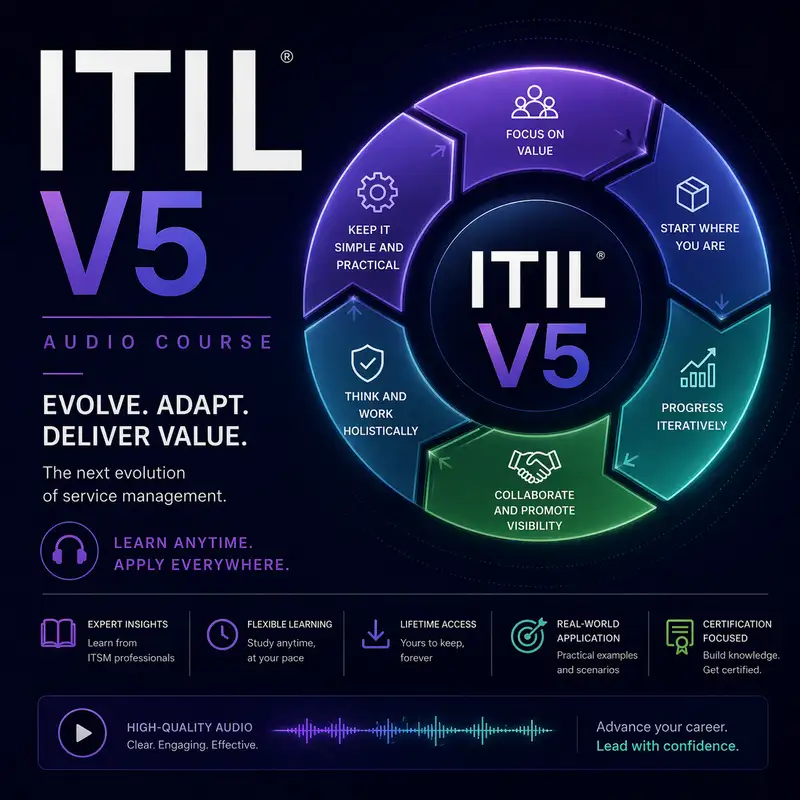
Another important part of the ITIL Value System is the set of guiding principles, which act like durable ways of thinking that help people make sound choices in many different situations. These principles are not rigid instructions and they are not a script that removes judgment. They are more like trusted reminders that keep decision making anchored when work becomes messy, uncertain, or politically complicated. Focusing on value, starting where you are, progressing iteratively with feedback, collaborating and promoting visibility, thinking and working holistically, keeping it simple and practical, and optimizing and automating all help the system stay healthy. Each principle influences how people respond to demand and opportunity as they move through the engine. When people ignore the principles, they often overcomplicate work, hide information, chase activity that does not matter, or automate things that were not well understood in the first place. The principles do not replace the value system. They guide how people behave within it.
At the center of the system is the service value chain, and this is the part that often feels most like the moving machinery of the engine. The service value chain shows the key activities through which an organization responds to demand and opportunity and turns them into products and services that create value. Those activities include planning, improving, engaging, designing and transitioning, obtaining or building, and delivering and supporting. You do not need to imagine them as a single straight line, because work can move through them in different patterns depending on the situation. A new service idea may begin with engagement and planning, while a service issue may move quickly toward support and improvement. What matters is that the value chain provides a flexible operating model. It helps the organization coordinate work across many situations without pretending that every service or every problem should follow the exact same path every time.
The value chain does not operate alone, because practices give the organization the capabilities it needs to perform those activities well. A practice in ITIL is not just a habit or a repeated task. It is a structured capability made up of people, knowledge, tools, processes, roles, and other resources that support specific kinds of work. Incident management, service desk, change enablement, problem management, relationship management, and many other practices contribute to the value chain at different moments. This is important because the engine of value creation is not powered by theory alone. It is powered by real organizational abilities that help teams respond, coordinate, communicate, learn, and improve. When a beginner first sees the long list of practices, it can feel overwhelming. The value system helps reduce that confusion by showing that practices are not floating on their own. They are capabilities that plug into the larger engine to help value move from idea to outcome.
Continual improvement is another essential part of the system, and it is built into the model because no service remains perfect for very long. Needs change, technologies change, suppliers change, risks change, and user expectations change, so a service that once felt strong can slowly become awkward or fragile if nobody keeps learning from experience. Continual improvement means the organization regularly looks at performance, feedback, friction, and missed opportunities and then makes sensible changes that strengthen value over time. It is not supposed to be a once a year event or a giant transformation every time something goes wrong. Inside the value system, improvement is always present because learning is always present. That is one reason the engine metaphor works so well. A real engine needs tuning, maintenance, observation, and occasional redesign if it is going to keep performing under real conditions. The same is true for a service organization that wants to remain useful and trustworthy.
The Four Dimensions also matter inside the ITIL Value System, because every part of the engine depends on organizations and people, information and technology, partners and suppliers, and value streams and processes. You can think of the value system as the overall model of motion and direction, while the Four Dimensions help you examine whether the system is balanced and realistic. If leaders set strong priorities but teams are poorly trained, the system will struggle. If the service value chain is clear but the information is unreliable or the technology is brittle, value will still be weakened. If a service depends heavily on outside suppliers but those relationships are poorly managed, then demand may enter the system smoothly and still emerge as frustration on the other side. This connection matters because beginners sometimes treat the Four Dimensions and the value system as separate topics to memorize. They are actually closely related ways of understanding how a service organization creates value in the real world.
A realistic scenario can make all of this much easier to hear. Imagine a public library launching a digital borrowing service so that members can reserve books, download audio content, and manage due dates from home. Demand comes from members who want easier access, while opportunity comes from the library seeing a chance to expand reach and improve convenience. Governance sets the direction by clarifying goals, budget limits, privacy expectations, and decision authority. The guiding principles shape choices, perhaps encouraging the team to start where it is, keep the design practical, and gather feedback early. The value chain helps the library engage users, plan the rollout, design the service, obtain or build needed capabilities, deliver support, and improve after launch. Practices such as relationship management, incident management, and service desk activity help the service function in daily life. The whole experience creates value only if the pieces work together in a coherent way.
Now imagine the same library focusing too narrowly on one part of the engine. Suppose it buys an impressive platform but gives little attention to staff preparation, supplier coordination, or the way borrowing issues will be handled when users get locked out. The technology might look excellent during a demonstration, yet the real service may disappoint people almost immediately. Members may struggle with account setup, staff may not know how to answer common questions, and leaders may not receive useful feedback until frustration is already spreading. In that case, the organization did not lack effort. It lacked a balanced value system. The engine was missing coordination between governance, principles, capabilities, and flow. This is a common misconception for beginners, because modern service work can look like a technology story from the outside. ITIL keeps pulling your attention back to the wider system so you can see that value creation depends on more than a platform, a project plan, or a single hard working team.
By the end of this discussion, the ITIL Value System should feel less like a formal diagram and more like a practical explanation of how value is created on purpose. A simple way to hold it in your mind is this: demand and opportunity enter the organization, governance and guiding principles shape choices, the service value chain gives work a path, practices provide capability, and continual improvement keeps learning alive over time. The Four Dimensions make sure that whole picture stays grounded in people, technology, partners, and flow instead of drifting into theory. That is why the model deserves to be called the engine of value creation. It connects signals from the outside world to coordinated action inside the organization and then to outcomes that matter for stakeholders. Once you understand that, later topics become easier because you have a strong frame for placing them. You are no longer hearing scattered ideas that happen to share the same textbook. You are hearing a living system designed to turn need, opportunity, and effort into value that people can actually feel.